
How To Write Test Cases in Manual Testing With Example
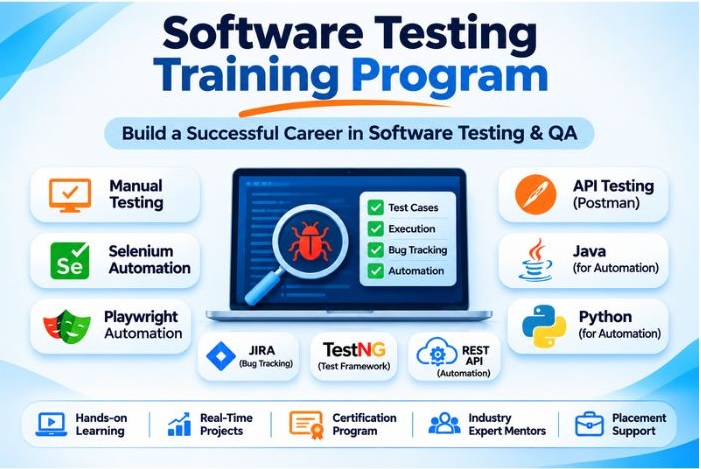
Join the top online/offline Full Stack Software Testing Training globally with live classes, Manual Testing, Selenium automation, API Testing, Database, Agile and placement support.
- 2 Months
- Beginner
- Online & classroom
- Certificate
Our learners work at


What's included
-
Duration: 2 MonthsLive, instructor-led sessions
-
Expert industry trainersTrainers who work in the field
-
Recorded sessionsRevisit any class you missed
-
E-learning accessNotes and material in the LMS
-
Hands-on live projectsReal-world assignments for your portfolio
-
Free assessmentsTest your knowledge as you go
-
Post-training supportDoubt-clearing after the course
-
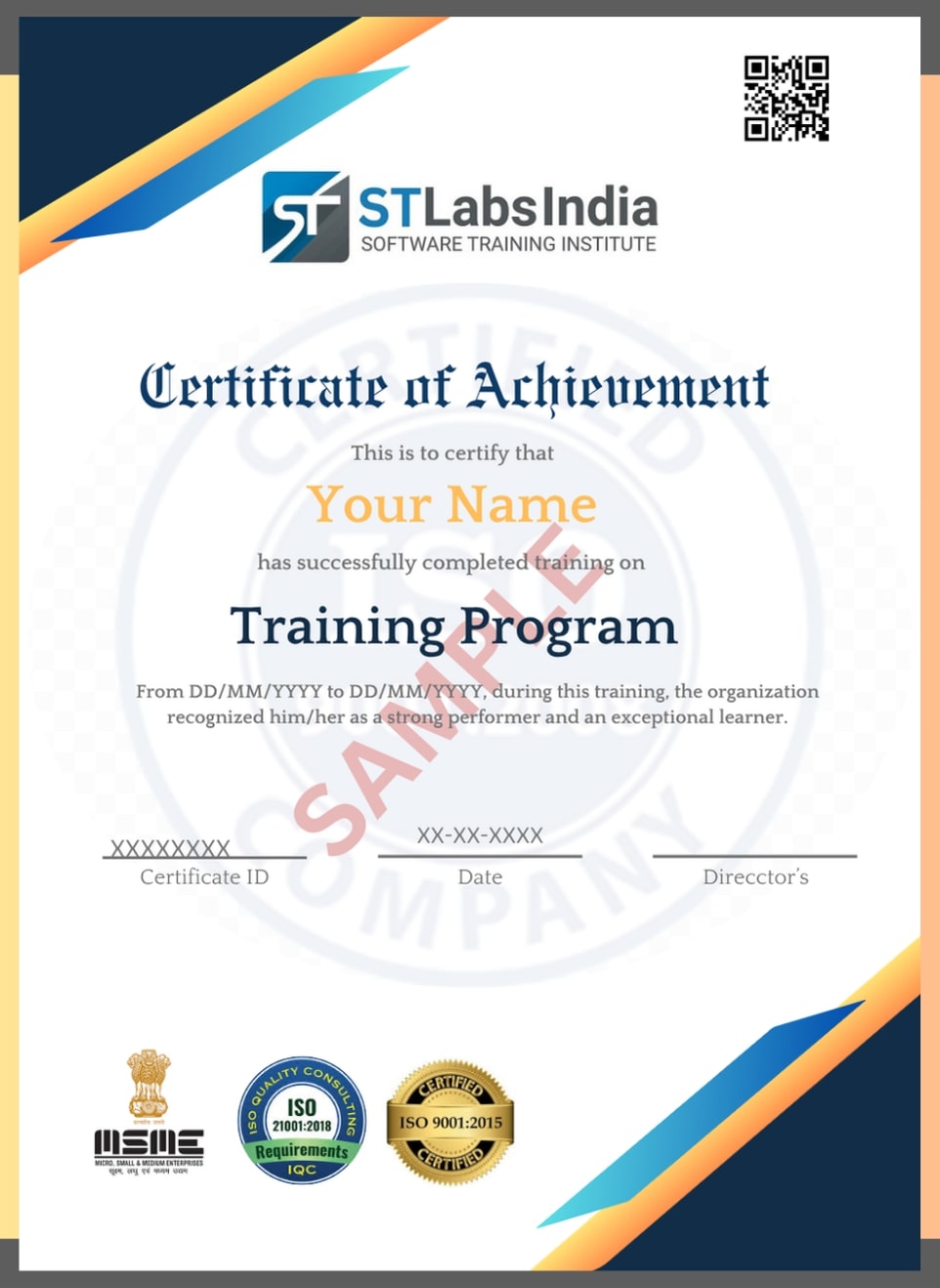
Course certificateIssued by STLabs India on completion
-
100% placement assistanceResume, mock interviews, referrals
About this course
How To Write Effective Test Cases – A Practical Guide for QA Professionals
Are you searching for how to write effective test cases in software testing? Writing clear, detailed, and well-structured test cases is one of the most important skills for every QA professional.
At STLabs India, we train students and professionals to write high-quality software testing test cases that improve product quality, reduce defects, and ensure better test coverage.
Whether you are a beginner in manual testing or preparing for QA interviews, this guide will help you understand the process of writing effective test cases.
What Is a Test Case in Software Testing?
A test case is a documented set of conditions, inputs, actions, and expected results used to verify whether a software application works as intended.
In manual testing training programs, learning test case writing is a core skill because it ensures:
• Clear testing steps
• Proper requirement coverage
• Reduced ambiguity
-
Easier defect identification
Why Writing Effective Test Cases Is Important
When students search for:
• how to write test cases in manual testing
• test case writing examples
• software testing test case format
• QA best practices
They want to understand how structured testing improves product quality.
Effective test cases help:
✔ Ensure complete requirement coverage
✔ Reduce production defects
✔ Improve communication between QA & developers
✔ Support regression testing
✔ Simplify future maintenance
Standard Test Case Format
A well-written test case usually includes:
• Test Case ID
• Test Case Title
• Module Name
• Pre-conditions
• Test Steps
• Test Data
• Expected Result
• Actual Result
• Status (Pass/Fail)
Using a proper format ensures consistency and clarity.
Steps to Write Effective Test Cases
1️⃣ Understand the Requirement Clearly
• Before writing test cases:
• Read requirement documents carefully
• Clarify doubts with business analysts
• Identify functional and non-functional requirements
• Understanding SDLC and STLC concepts helps in writing better test scenarios.
2️⃣ Write Clear and Concise Test Steps
• Each test step should:
• Be simple and easy to understand
• Follow logical sequence
• Avoid unnecessary details
• Focus on one validation at a time
• Clarity reduces confusion during test execution.
3️⃣ Define Expected Results Clearly
An effective test case must clearly mention:
• What should happen after performing the steps
• Validations of UI, data, and functionality
• Success or failure criteria
• Expected results should be specific, not vague.
4️⃣ Cover Positive and Negative Scenarios
• Good QA professionals write:
• Positive test cases (valid input)
• Negative test cases (invalid input)
• Boundary value test cases
• Edge case scenarios
This improves overall test coverage.
5️⃣ Make Test Cases Reusable
• Effective test cases should:
• Be modular
• Avoid duplication
• Be easy to update
• Support regression testing
Reusable test cases save time during future releases.
Example of a Simple Test Case
Test Case Title: Verify Login with Valid Credentials
Steps:
-
1. Open login page
-
2. Enter valid username
-
3. Enter valid password
-
4. Click Login button
Expected Result:
User should be successfully redirected to the dashboard page.
This basic structure is commonly taught in manual testing training programs at STLabs India.
Common Mistakes to Avoid While Writing Test Cases
❌ Writing unclear steps
❌ Missing expected results
❌ Ignoring negative scenarios
❌ Not reviewing requirements properly
❌ Using inconsistent formats
Avoiding these mistakes improves your QA performance.
Learn Professional Test Case Writing at STLabs India
At STLabs India, our manual testing training programs focus heavily on:
• Real-time test case writing
• Functional & regression testing
• Defect lifecycle management
• Interview-based QA preparation
If you want practical exposure and career-oriented training in software testing, we provide structured guidance and placement support.
Conclusion
Understanding how to write effective test cases is essential for every aspiring QA professional. Clear, structured, and well-documented test cases ensure better software quality and improve career opportunities.
If you want to master manual testing and professional test case writing, join STLabs India – a trusted software testing training institute.
👉 Contact us today to learn more about our software testing programs.
Curriculum
7 modules designed by industry experts
You will learn:
• Software Testing fundamentals and QA best practices
• Software Development Life Cycle (SDLC) & Software Testing Life Cycle (STLC)
• Manual Testing concepts and test case design techniques
• Functional, Regression, Smoke, and Sanity Testing
• Defect lifecycle, bug tracking, and reporting
• Automation Testing fundamentals using Selenium
• Core Java basics for Automation Testing
• TestNG framework and Page Object Model (POM)
• API Testing basics for backend validation
• Database Testing fundamentals using SQL
• Agile & Scrum methodology for testers
• Real-time project testing and industry use cases
• Interview preparation and job-oriented QA skills
• Common Causes of Errors in a Software Application
• Importance of QA in Software Development
• Client- Server Architecture & Types of Software
• Software Development Life Cycle (SDLC)
• Software Testing Life Cycle (STLC)
• Testing Levels & Testing Types
• Functional & Non-Functional Testing
• Smoke & Sanity Testing
• Retesting & Regression Testing
• Integration & System Testing
• User Acceptance Testing (UAT)
• Browser Compatibility Testing/Cross Browser Testing
• User Acceptance Testing
• Exploratory Testing
• Split and Penetration Testing
• Usability, Content & UI Testing
• API, Security & Database Testing
• Test Scenarios & Test Scripts
• Error Guessing & Boundary Value Analysis
• Equivalence Partitioning
• Decision Table Testing
• Test Data Preparation
• Severity vs Priority
• Defect Reporting Best Practices
• Bug Tracking Tools Overview
• Real-Time Defect Handling
Who this course is for
- Fresh graduates Start your career with skills employers hire for.
- Working professionals Upskill for a promotion, a new role or a better salary.
- Career switchers Move into tech from any background with a structured path.
- Entrepreneurs Learn enough to build and run the tech side of your business.
Your certificate
-
Issued by STLabs IndiaAwarded on completing the course and the assessment of your practical projects.
-
Lifetime validityYour certificate does not expire and shows the skills you practised.
-
How to earn itComplete all modules, take part in the hands-on labs and pass the final project review.
-
Why it helpsStrengthens your resume and portfolio and prepares you for related global certifications.
Frequently asked questions
Still have a question?
Related courses
 Software Testing
3000 Rs OFF
JMeter Training Program
Join STLabs India for JMeter training program. Learn Apache JMeter, load & performance testing, CI/CD integration & AI-powered optimization.
 Software Testing
5000 Rs OFF
Manual Testing Training Program
Join STLabs India, a leading manual testing training institute. Get job-oriented QA training, certification & placement assistance.
 Software Testing
5000 Rs OFF
Postman API Training Program
Join STLabs India for Postman API certification training. Learn REST API testing, automation & AI-powered API validation with job support.
 Software Testing
5000 Rs OFF
Playwright Automation with JavaScript Training Program
Join STLabs India for Playwright automation with JavaScript training. Learn modern web testing, cross-browser automation & AI-powered scripting.
Start your Software Testing Training journey
Choose a weekday, weekend or fast-track batch. Send a request and our team will call you back.
Get in touch
Software Testing Training · we'll get back to you shortly.
Enquiry sent
Thank you! We will get back to you soon.
Download the curriculum
Share your details and the PDF download starts right away.
Your download is starting
If it doesn't open, open the curriculum PDF.