Skip to content
Limited offer

Save up to ₹25,000 on select courses

View offers
Not sure which course fits you? Talk to an expert View all 84 courses
Data Analytics & BI 20000 Rs OFF

Google Data Analytics Alternative in USA

Explore Google Data Analytics Alternative in USA. Learn SQL, Python, Power BI, Tableau, and real-world analytics skills with STLabs India training.

  • 4-6 Months
  • Advanced
  • Online & classroom
  • Certificate
Enroll now
4.8/5 from 1,568+ reviews on Course Report
Data Analytics Training

Our learners work at

  • Amazon
  • IBM
  • HCLTech
  • MetLife
  • Emerson
  • Birlasoft

What's included

  • Duration: 4-6 MonthsLive, instructor-led sessions
  • Expert industry trainersTrainers who work in the field
  • Recorded sessionsRevisit any class you missed
  • E-learning accessNotes and material in the LMS
  • Hands-on live projectsReal-world assignments for your portfolio
  • Free assessmentsTest your knowledge as you go
  • Post-training supportDoubt-clearing after the course
  • Course certificateIssued by STLabs India on completion
  • 100% placement assistanceResume, mock interviews, referrals

About this course

The demand for data analytics professionals continues to grow rapidly across industries, and many learners often search for the Google Data Analytics Alternative in USA to find more practical, advanced, and career-focused training options. While the Google Data Analytics Certificate provides a good foundation, many students and working professionals look for programs that offer deeper technical skills, real-world projects, and stronger job readiness.

STLabs India offers a comprehensive and industry-focused Data Analytics Training Program in USA that serves as a powerful alternative to traditional certification courses. This program is designed to provide hands-on experience, advanced tools training, and real-world project exposure that helps learners become job-ready data professionals.

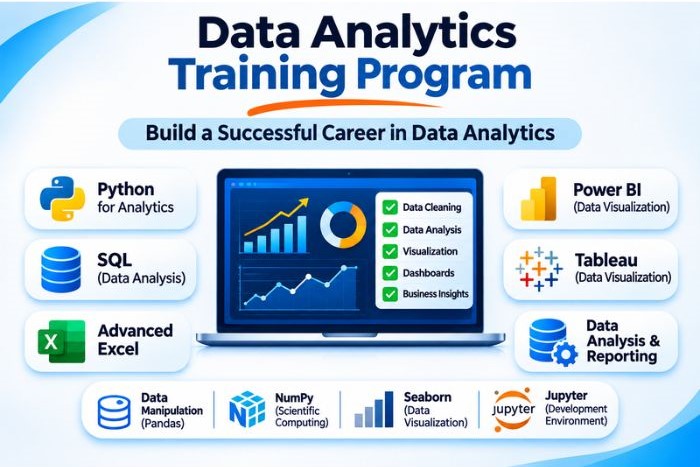
The curriculum covers essential topics such as Data Analytics Fundamentals, Data Cleaning, Data Visualization, Statistical Analysis, Business Intelligence, and Data Reporting. In addition, learners gain advanced technical skills in tools like SQL, Python, Power BI, Tableau, and Excel, which are widely used in real business environments.

Unlike basic certification programs, this alternative focuses heavily on practical learning. Students work on live projects and real industry case studies from domains such as finance, healthcare, retail, marketing, and e-commerce. This helps learners understand how data is used to solve actual business problems and improve decision-making.

One of the major advantages of choosing this Google Data Analytics Alternative is the strong emphasis on job-oriented training. The program includes resume building, interview preparation, portfolio development, and personalized mentorship from industry experts. This ensures learners are not just certified but truly prepared for data analyst roles.

The course is suitable for beginners as well as professionals who want to upgrade their skills or switch careers into data analytics. Flexible online learning options allow students to learn at their own pace from anywhere in the USA.

After completing this program, learners can apply for roles such as Data Analyst, Business Analyst, Reporting Analyst, BI Developer, Power BI Developer, and Data Visualization Specialist. The practical skills gained through this training significantly improve employability and career growth opportunities.

If you are looking for a more practical and career-focused option than the Google Data Analytics Certificate, STLabs India provides the perfect alternative. Join this program and build strong, job-ready data analytics skills with real-world experience.

Curriculum

6 modules designed by industry experts

(Excel | SQL | Python | Power BI | Tableau | Generative AI | Real-Time Projects)

By STLabs India

This curriculum is designed to make you job-ready for roles like Data Analyst, Business Analyst, BI Developer, and Reporting Analyst with strong practical exposure.
- What is Data Analytics?
- Types of Analytics (Descriptive, Diagnostic, Predictive, Prescriptive)
- Data Analytics Lifecycle
- Role of a Data Analyst
- Tools & Technologies Overview
- Industry Use Cases

Outcome: Understand the complete analytics ecosystem.
- Excel Basics & Advanced Functions
- Data Cleaning Techniques
- Conditional Formatting
- Pivot Tables & Pivot Charts
- Lookup Functions (VLOOKUP, XLOOKUP)
- Dashboard Creation
- Data Validation

🛠 Hands-on Excel projects included.
- Introduction to Databases
- SQL Basics (SELECT, WHERE, ORDER BY)
- Aggregate Functions (SUM, COUNT, AVG)
- GROUP BY & HAVING
- Joins (Inner, Left, Right)
- Subqueries
- Working with Real Datasets
- Python Basics
- NumPy for Numerical Operations
- Pandas for Data Manipulation
- Data Cleaning & Transformation
- Handling Missing Data
- Exploratory Data Analysis (EDA)
06 Module 5: Data Visualization
Sign up free to see the full curriculum 1 more modules open after you register.

Who this course is for

  • Fresh graduates Start your career with skills employers hire for.
  • Working professionals Upskill for a promotion, a new role or a better salary.
  • Career switchers Move into tech from any background with a structured path.
  • Entrepreneurs Learn enough to build and run the tech side of your business.

Your certificate
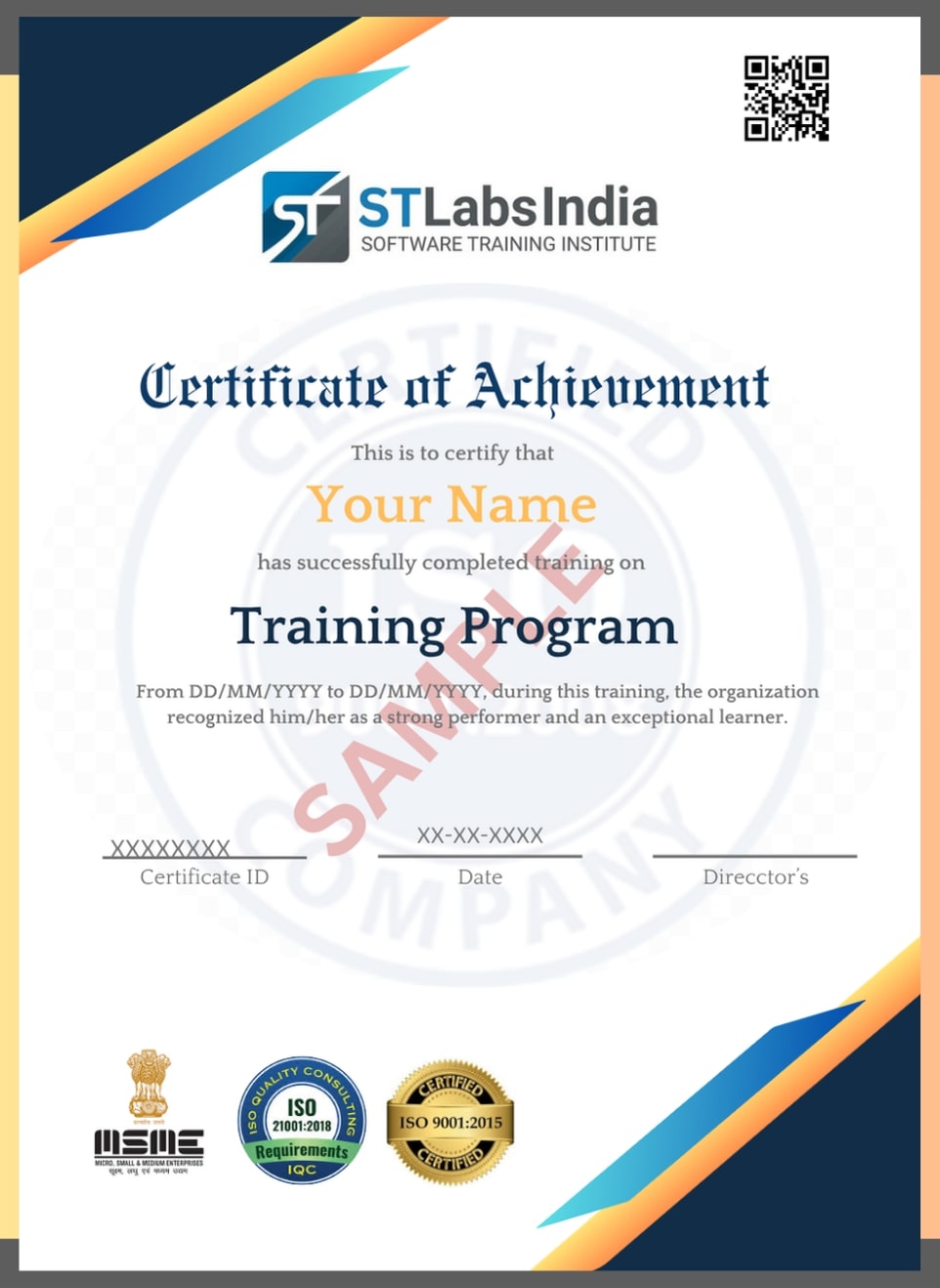
Sample STLabs India course completion certificate
  • Issued by STLabs IndiaAwarded on completing the course and the assessment of your practical projects.
  • Lifetime validityYour certificate does not expire and shows the skills you practised.
  • How to earn itComplete all modules, take part in the hands-on labs and pass the final project review.
  • Why it helpsStrengthens your resume and portfolio and prepares you for related global certifications.

Frequently asked questions

Data Analytics is the process of collecting, cleaning, analyzing, and interpreting data to make informed business decisions using tools like Excel, SQL, Power BI, Tableau, and Python.
Yes. Data Analytics is one of the fastest-growing career fields globally with high demand in industries like IT, finance, healthcare, e-commerce, and consulting.
You do not need a technical background. Basic knowledge of mathematics and logical thinking is helpful, but beginners and non-IT professionals can learn data analytics.
Typically: Beginner course: 2–3 months Job-oriented program: 4–6 months Advanced specialization: 6+ months Learning time depends on your practice and dedication.
Most online programs include: -Excel / Advanced Excel -SQL -Power BI -Tableau -Python for Data Analytics -Data Visualization techniques
Data Analytics focuses on analyzing existing data and generating insights. - Data Science includes advanced machine learning, AI models, and predictive analytics. - Data Analytics is often the entry point into Data Science.
Yes. Online Data Analytics training offers: Live instructor-led classes Recorded sessions Assignments & projects Flexible schedule Many learners prefer online training due to convenience.
Basic coding in Python and SQL is required, but advanced programming is not mandatory for beginners.
Average salaries (approximate): - Canada: CAD 60,000–95,000 per year - USA: $70,000–110,000 per year - India: ₹4–10 LPA (entry-level varies) Salaries increase with experience and skills.
Many institutes offer: - Resume building - Mock interviews - Job assistance - Internship programs Always check placement support before enrolling.
- Fresh graduates - Working professionals - Career switchers - Business professionals - IT professionals upgrading skills
Projects may include: - Sales dashboard analysis - Customer segmentation - Financial reporting - Marketing data analysis - KPI dashboard creation
A course that includes: Excel SQL Power BI or Tableau Python basics Real-time projects Placement support
Yes. Many successful data analysts come from non-technical backgrounds such as commerce, finance, marketing, and operations.
To become a Data Analyst in India, start by developing skills in Microsoft Excel, SQL, Python, and data visualisation tools such as Power BI or Tableau. You should also understand basic statistics, data cleaning, business reporting, and analytical problem-solving. A good way to begin is to join a structured Data Analyst Course, practise with real-world datasets, and build projects such as sales analysis, customer behaviour analysis, and business dashboards. At STLabs India, our Data Analytics Training Program focuses on practical learning, industry-oriented exposure, and career preparation to help learners develop relevant analytics skills.
The best Data Analyst Course for beginners is one that starts with the fundamentals and gradually introduces practical analytics tools and business applications. Look for a training program that provides: Practical exposure to data analysis. Advanced Excel and SQL knowledge. Python for data analysis. Power BI and Tableau understanding. Business-oriented assignments and projects. Interview preparation and career guidance. STLabs India offers an industry-oriented Data Analytics Training Program for beginners, fresh graduates, and working professionals who want to develop skills for analytics-related careers.
The salary of a Data Analyst in India depends on experience, technical skills, location, industry, and employer. As an indicative reference, entry-level Data Analyst salaries are often around ₹3–5 LPA, while professionals with a few years of relevant experience may earn approximately ₹5–10 LPA or more. Senior professionals can earn higher packages depending on their responsibilities and expertise. Skills in SQL, Python, Excel, Power BI, Tableau, and business analytics can strengthen your professional profile. These figures are indicative market estimates, not guaranteed salary offers.
Yes, freshers can apply for entry-level positions such as Junior Data Analyst, MIS Analyst, Reporting Analyst, and Junior Business Intelligence Analyst. However, completing a Data Analytics Course alone does not guarantee a job. Employers generally look for practical knowledge, analytical thinking, problem-solving ability, communication skills, and the ability to work with datasets. Freshers should build a portfolio of practical projects, learn SQL and Excel thoroughly, understand Power BI, and prepare for technical interviews. STLabs India provides career guidance, resume preparation, mock interview support, and placement assistance to help learners prepare for relevant job opportunities.
Yes, you can start learning Data Analytics without advanced programming knowledge. Tools such as Microsoft Excel and Power BI allow users to perform several analytical tasks with limited coding. However, learning SQL is important for working with databases, and Python can help with more advanced data manipulation and automation. You can begin with Excel and basic analytics concepts and gradually develop your programming skills as you progress.
Yes. Students and professionals from commerce, management, finance, science, marketing, and other non-IT backgrounds can pursue a career in Data Analytics. You do not necessarily need an IT degree or previous programming experience to begin learning. What matters is your ability to understand data, develop analytical skills, solve problems, and communicate findings. A structured Data Analytics Training Program can help non-IT learners understand the tools and techniques used by professional Data Analysts.
There is no single educational qualification required for every Data Analyst position. Employers may accept candidates from B.Tech, BCA, B.Sc, B.Com, BBA, MBA, MCA, and other relevant educational backgrounds. Some organisations prefer graduates with mathematics, statistics, computer science, economics, or business-related knowledge. Apart from academic qualifications, employers commonly evaluate: Analytical and logical thinking. Excel and spreadsheet skills. SQL and database knowledge. Python or other analytical programming skills. Power BI or Tableau. Communication and problem-solving abilities. The eligibility requirements vary from one organisation to another.
The time required to learn Data Analytics depends on your educational background, previous technical knowledge, learning schedule, and practical experience. A beginner may need approximately 3–6 months of structured learning and regular practice to develop foundational skills in analytics tools and techniques. Becoming confident in solving business problems and handling real-world datasets requires continued practice. STLabs India's Data Analytics Training Program is designed to provide structured learning and practical exposure over a planned training duration.
A professional Data Analyst needs a combination of technical, analytical, and communication skills. Important skills include: Microsoft Excel: Data organisation, formulas, Pivot Tables, and reporting. SQL: Retrieving, filtering, and analysing database information. Python: Data manipulation, analysis, and automation. Power BI: Creating interactive reports and business dashboards. Tableau: Data visualisation and business reporting. Statistics: Understanding trends, distributions, and relationships. Data Cleaning: Identifying missing, incorrect, and duplicate information. Business Understanding: Converting business requirements into analytical questions. Communication: Explaining insights and presenting findings clearly. Knowledge of Generative AI tools can also help Data Analysts improve productivity and support analytical workflows.
SQL is one of the most important technical skills for Data Analysts because organisations store large amounts of business information in databases. Data Analysts use SQL to retrieve records, filter information, combine tables, calculate aggregates, and generate reports. Knowledge of SELECT statements, WHERE conditions, GROUP BY, JOINs, subqueries, CTEs, and window functions can help you handle practical analytical requirements. Although some entry-level roles may not require advanced SQL, learning it is strongly recommended for anyone planning a career in Data Analytics.
Python is not mandatory for every Data Analyst job, but it is a valuable skill that can expand your career opportunities. Python is commonly used for: Data cleaning and preparation. Handling large datasets. Exploratory Data Analysis. Automating repetitive tasks. Statistical analysis. Working with libraries such as Pandas and NumPy. Supporting AI-assisted analytics workflows. For beginners, starting with Excel and SQL before progressing to Python can be a practical learning approach.
Both Power BI and Tableau are widely used business intelligence and data visualisation tools. The right choice depends on the organisation, project requirements, and existing technology environment. Power BI: Strong integration with Microsoft products. Useful for business reporting and interactive dashboards. Supports data modelling and DAX calculations. Commonly used in Microsoft-based business environments. Tableau: Known for interactive data visualisation. Supports multiple data sources. Offers flexible dashboard development. Useful for visual exploration and analytical reporting. For beginners, learning Power BI first can be a practical choice, followed by Tableau to broaden your reporting and visualisation skills. Learning both can improve your versatility.
Data Analytics can be a promising career option in 2026 for people interested in technology, business intelligence, problem-solving, and working with data. Organisations across banking, finance, healthcare, retail, e-commerce, manufacturing, and IT use analytics to understand performance and support business decisions. The Indian job market continues to include Data Analyst opportunities, although competition and experience requirements vary. A recent October 2026 analysis of Indian technology job postings identified Data Analyst as one of the prominent technology job categories. Candidates who combine SQL, Excel, Python, Power BI, business understanding, and communication skills can prepare for a range of analytics-related opportunities.
Yes, completing a Data Analytics Course can help you prepare for entry-level and other analytics-related job opportunities. However, employment depends on several factors, including your practical skills, educational background, project experience, communication abilities, interview performance, and employer requirements. At STLabs India, learners receive career preparation support that may include resume building, mock interviews, project guidance, career counselling, and placement assistance. Our aim is to help learners prepare for recruitment opportunities and understand the expectations of employers. We do not guarantee employment simply on the basis of course completion.
Artificial Intelligence is changing how Data Analysts perform their work, but it does not mean that all Data Analyst roles will disappear. AI tools can assist with SQL query generation, data cleaning, report preparation, data exploration, and analytical summaries. These capabilities can improve productivity and reduce repetitive tasks. However, businesses still need professionals who can understand requirements, verify data accuracy, interpret findings, identify business problems, and communicate meaningful recommendations. Future-ready Data Analysts should develop traditional analytics skills alongside Generative AI, automation, and AI-assisted reporting capabilities. At STLabs India, we encourage learners to understand how AI tools can complement their Data Analytics knowledge and help them adapt to evolving industry requirements.

Still have a question?

Start your Data Analytics Training journey

Choose a weekday, weekend or fast-track batch. Send a request and our team will call you back.

Enroll at ₹35,000
₹35,000 ₹55,000
Enroll now